

Most freelancers use the word "client" dozens of times a week without stopping to ask what it actually means in a legal or contractual sense. The client definition sounds obvious until a dispute arises over who approved a deliverable, who owes payment, or whether a working relationship qualifies as a contractor arrangement at all. Getting this wrong costs money, creates confusion, and can even affect how tax authorities classify your work. This article breaks down the meaning of "client" across everyday business, regulated industries, and contract law so you can communicate precisely and manage your relationships with confidence.
Table of Contents
- Key Takeaways
- Client definition: what the word actually means
- Regulated contexts: when "client" has a legal definition
- Legal and practical implications for your contracts
- Client vs. related terms: clearing up the confusion
- My take on why this matters more than most freelancers think
- How Qoviro helps you manage client relationships with clarity
- FAQ
Key Takeaways
| Point | Details |
|---|---|
| "Client" has multiple meanings | The term shifts in meaning across everyday business, finance, and legal contexts. |
| Client vs. customer matters | Clients typically engage in ongoing service relationships; customers make one-off transactions. |
| Regulated thresholds exist | SEC rules set specific financial criteria for "qualified clients" that affect advisory contracts. |
| Contract language is critical | Defining who approves work and who pays in your contract prevents the most common freelance disputes. |
| Labels don't determine legal status | The IRS uses economic reality, not contract titles, to classify workers as contractors or employees. |
Client definition: what the word actually means
The word "client" carries more history than most people realize. Merriam-Webster defines it as "one that is under the protection of another," a meaning rooted in ancient Roman patronage where a citizen would align with a more powerful protector. That dependency relationship is still baked into how we use the word today, even in freelance work.
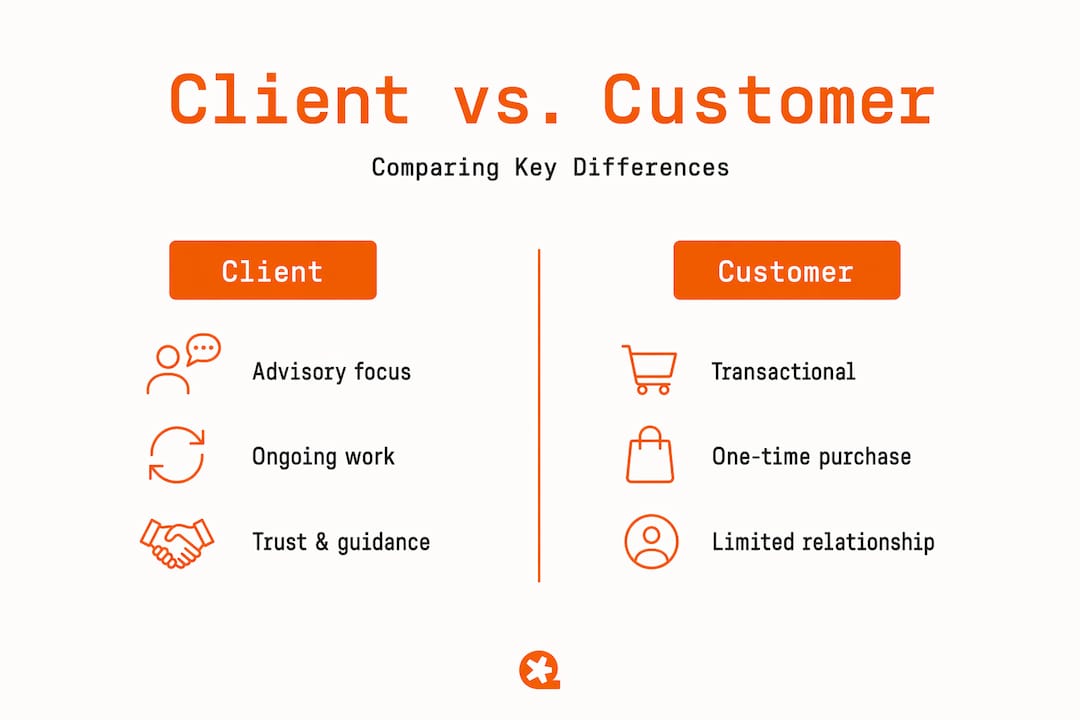
In modern business, the client meaning has evolved to describe someone who engages a professional for a service, typically over time and with some degree of ongoing interaction. This is where the client concept diverges from the word "customer." A customer buys a product or a one-time service and moves on. A client enters a relationship where the provider is expected to understand their needs, adapt over time, and deliver personalized results.
For freelancers, that distinction matters practically. Consider these differences:
- Ongoing engagement vs. one-off transaction. A graphic designer hired for a single logo is working with a customer in spirit, even if the contract says "client." A designer retained monthly to handle all brand assets is working with a true client.
- Relationship depth. Clients typically share internal information, goals, and feedback. Customers rarely do.
- Expectation of continuity. Clients often seek solutions over time, whereas customers complete a transaction and leave.
Understanding this distinction shapes how you write proposals, set expectations, and structure your fees. If you treat every project as a one-off customer transaction, you miss the opportunity to position yourself as a trusted advisor, which is where the real long-term income lives.
Regulated contexts: when "client" has a legal definition
Here is where things get genuinely complex, and where most freelancers have no idea they are operating in a gray zone.
In regulated industries, the definition of client is not just a business concept. It is a legal category with specific criteria attached to it. Two areas stand out for freelancers who work adjacent to finance or professional services.
SEC qualified client thresholds
If you provide any form of investment advice or financial consulting, the SEC's definition of a "qualified client" directly affects what services you can offer and how you can charge for them. New SEC thresholds effective June 29, 2026 set the bar at $1.4 million in assets under management or $2.7 million in net worth. These are inflation-adjusted figures, and they determine whether a client can participate in performance-fee arrangements.
Freelancers who consult in fintech, wealth management, or financial content creation should know whether their clients meet these thresholds. If your contract language does not reflect the current regulatory definition, you may inadvertently create compliance exposure for your client and yourself.
Pro Tip: If you work in any financially adjacent field, add a clause to your contract that specifies the regulatory context governing the engagement. It signals professionalism and protects both parties.
SRA standards for legal service clients
In legal practice, solicitors must provide clear information about how matters will be handled and priced. This is not optional. The Solicitors Regulation Authority treats client relationships as carrying built-in obligations around transparency, cost disclosure, and regulatory protections.
Freelancers who provide paralegal support, legal research, or contract drafting services often operate in this space without realizing that their clients may hold them to similar standards of clarity. Even if you are not a solicitor, your client may be a law firm that expects you to understand what a client relationship formally requires.
The broader lesson here is that client is context-dependent. The word means something different in ordinary conversation, in SEC-regulated finance, and in professional legal services. Knowing which context you are operating in is not a technicality. It is the foundation of a well-structured engagement.
Legal and practical implications for your contracts
This is where the rubber meets the road for freelancers. You can understand the theory of client definitions perfectly and still get burned if your contracts do not reflect that understanding.
The most common source of freelance disputes is ambiguity about who the client actually is within an organization. When you work with a company, is your client the marketing manager who hired you, the VP who has to approve the final deliverable, or the finance team that processes payment? These are three different people with three different levels of authority.

Effective freelance contracts define who approves deliverables, who requests changes, and who is responsible for payment. Without this clarity, you can end up in a loop where the person you are working with loves your work but cannot approve it, and the person who can approve it keeps requesting changes you were never briefed on.
Here are the contract elements that resolve this before it becomes a problem:
- Approval authority. Name the specific individual or role authorized to sign off on deliverables.
- Change request process. Specify who can request revisions and how those requests must be submitted.
- Payment responsibility. Identify the entity, not just the person, legally obligated to pay your invoices.
- Engagement scope. Define whether this is a project-based engagement with a clear end date or an ongoing retainer.
On the topic of retainers specifically: retainer agreements should specify term or termination conditions to define client scope clearly. A retainer without a defined end-point creates ambiguity about when the relationship concludes and what happens to work in progress if either party wants to exit.
Pro Tip: For retainer clients, include a 30-day written notice clause for termination and a clear statement of what constitutes project completion. This alone prevents the majority of retainer-related disputes.
One more critical point: the IRS does not care what your contract calls the other party. Economic reality determines worker classification, not labels. If your "client" controls your schedule, dictates your tools, and provides your equipment, federal rules may classify you as an employee regardless of what the contract says. Calling someone a client does not make the relationship a contractor arrangement in the eyes of the law.
Client vs. related terms: clearing up the confusion
Freelancers routinely mix up "client," "customer," "contractor," and "vendor." Each word signals a different kind of relationship, and using the wrong one sends the wrong message.
| Term | Relationship type | Duration | Who holds authority |
|---|---|---|---|
| Client | Service-based, advisory | Ongoing or project-based | Client approves outcomes |
| Customer | Transactional | Short-term or one-off | Customer chooses product |
| Contractor | Work-for-hire | Project-defined | Hiring party sets scope |
| Vendor | Supply-based | Ongoing supply | Buyer controls volume |
The confusion between "client" and "customer" is the most common. A client engages your expertise and trusts your judgment. A customer selects from what you offer. When a freelance copywriter calls every buyer a "client," they are actually signaling a higher level of service and relationship depth than a transactional sale warrants. That can create mismatched expectations on both sides.
Misusing "contractor" is equally problematic. If you refer to yourself as a contractor in communications but your contract frames the other party as a client with significant control over your process, you have created a contradiction that could matter legally. Consistent language across your proposals, contracts, and invoices is a basic client management skill that protects you.
Good client management also means recognizing when a relationship has shifted. A one-time customer who keeps coming back with new projects is becoming a client. Updating your language and your contract structure to reflect that shift is not just accurate. It opens the door to retainer conversations and more stable income.
My take on why this matters more than most freelancers think
I've watched freelancers lose thousands of dollars over contract disputes that came down to one thing: nobody defined who the client actually was. Not in a philosophical sense. In a practical, contractual sense.
In my experience, the freelancers who treat "client" as a casual word rather than a defined term are the ones who end up chasing payments, fielding revision requests from people who were never part of the original agreement, and wondering why projects never seem to end. The ones who get precise about it early, who name the approver, the payer, and the scope in writing, almost never have those problems.
What I've learned is that the definition of client is not just a legal formality. It is a communication tool. When you define the client relationship clearly at the start, you set the tone for how the entire project will run. You signal that you are a professional who understands the business of freelancing, not just the craft.
I've also seen freelancers in finance-adjacent or legal-adjacent work get blindsided by regulatory definitions they did not know existed. The SEC's updated qualified client thresholds are a perfect example. If you are consulting in that space and your contracts do not reflect the current regulatory language, you are carrying risk you do not know about.
My advice: treat the client definition in every contract as a deliberate choice, not a default. It takes ten minutes to get right and can save you months of headaches.
— Lilian
How Qoviro helps you manage client relationships with clarity
Once you have your client definitions locked down, the next challenge is keeping every engagement organized without losing hours to scattered emails and app-switching.
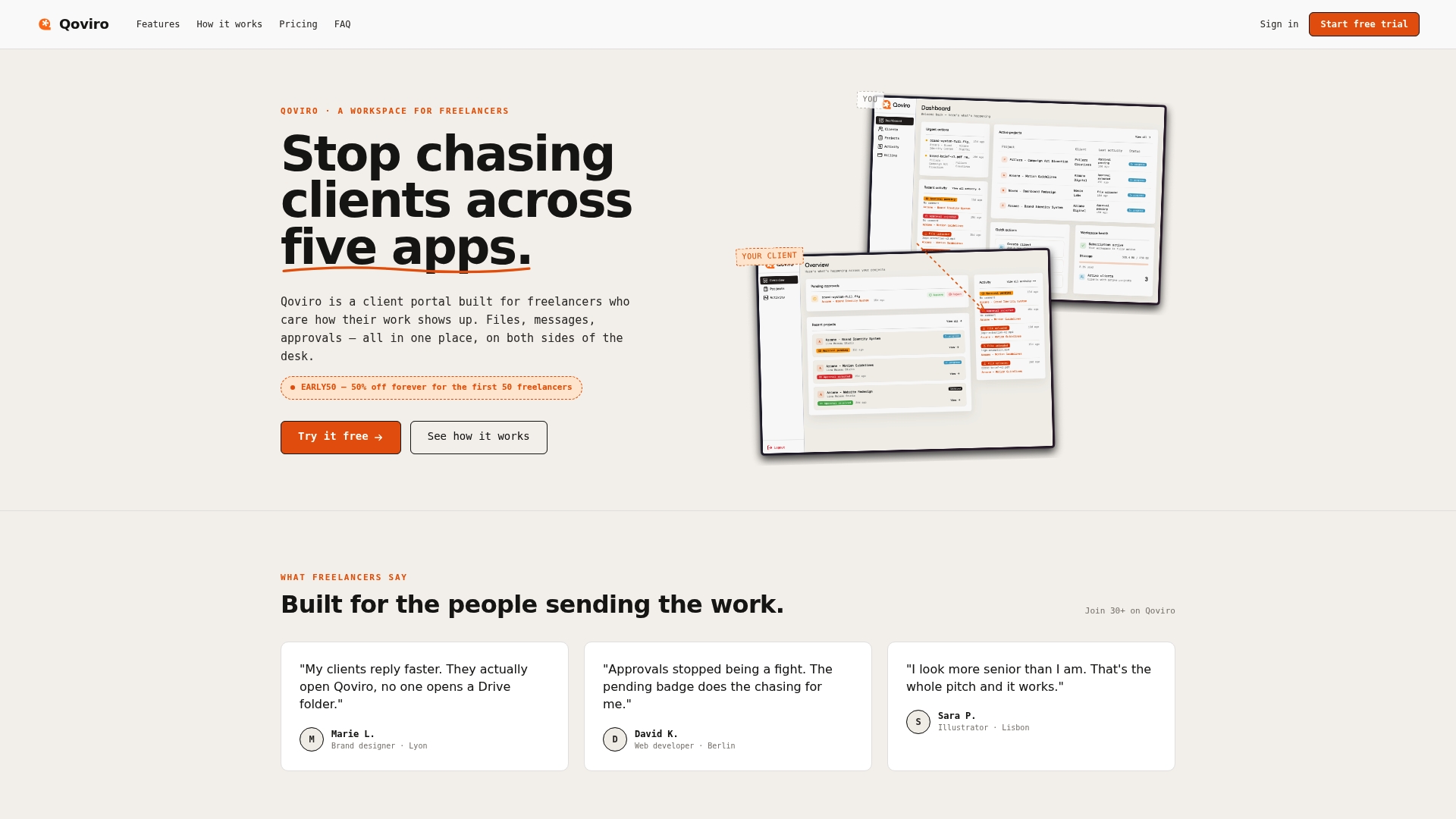
Qoviro is built specifically for freelancers who want to present their work professionally and keep client communications, files, and approvals in one place. Instead of hunting across five different apps to find the latest feedback or the approved version of a deliverable, everything lives in a single project-organized interface. That means faster client responses, cleaner approval trails, and client billing that does not require you to reconstruct a timeline from memory. If you are serious about client management, Qoviro gives you the structure to back it up.
FAQ
What is the standard client definition in business?
A client is a person or organization that engages a service provider in an ongoing or project-based relationship, typically involving professional expertise. This differs from a customer, who usually makes a one-time transactional purchase.
How does the IRS define a client relationship?
The IRS does not rely on contract labels like "client" to classify working relationships. Federal rules use an economic reality test, examining actual control and dependency to determine whether a worker is an independent contractor or an employee.
What is a qualified client under SEC rules?
A qualified client is an investor who meets specific financial thresholds set by the SEC. As of June 29, 2026, those thresholds are $1.4 million in assets under management or $2.7 million in net worth, allowing access to performance-fee advisory arrangements.
Why does defining "client" in a contract matter for freelancers?
Specifying who approves deliverables, who can request changes, and who is responsible for payment in your contract prevents the most common freelance disputes. Ambiguity about the client's identity within an organization is a leading cause of scope creep and delayed payments.
What is the difference between a client and a customer?
A client engages a professional for ongoing or advisory services and expects a relationship built on expertise and trust. A customer makes a transactional purchase with little expectation of a continuing relationship.